Dog Training in Anchorage: Where to Train, What It Costs and What Works
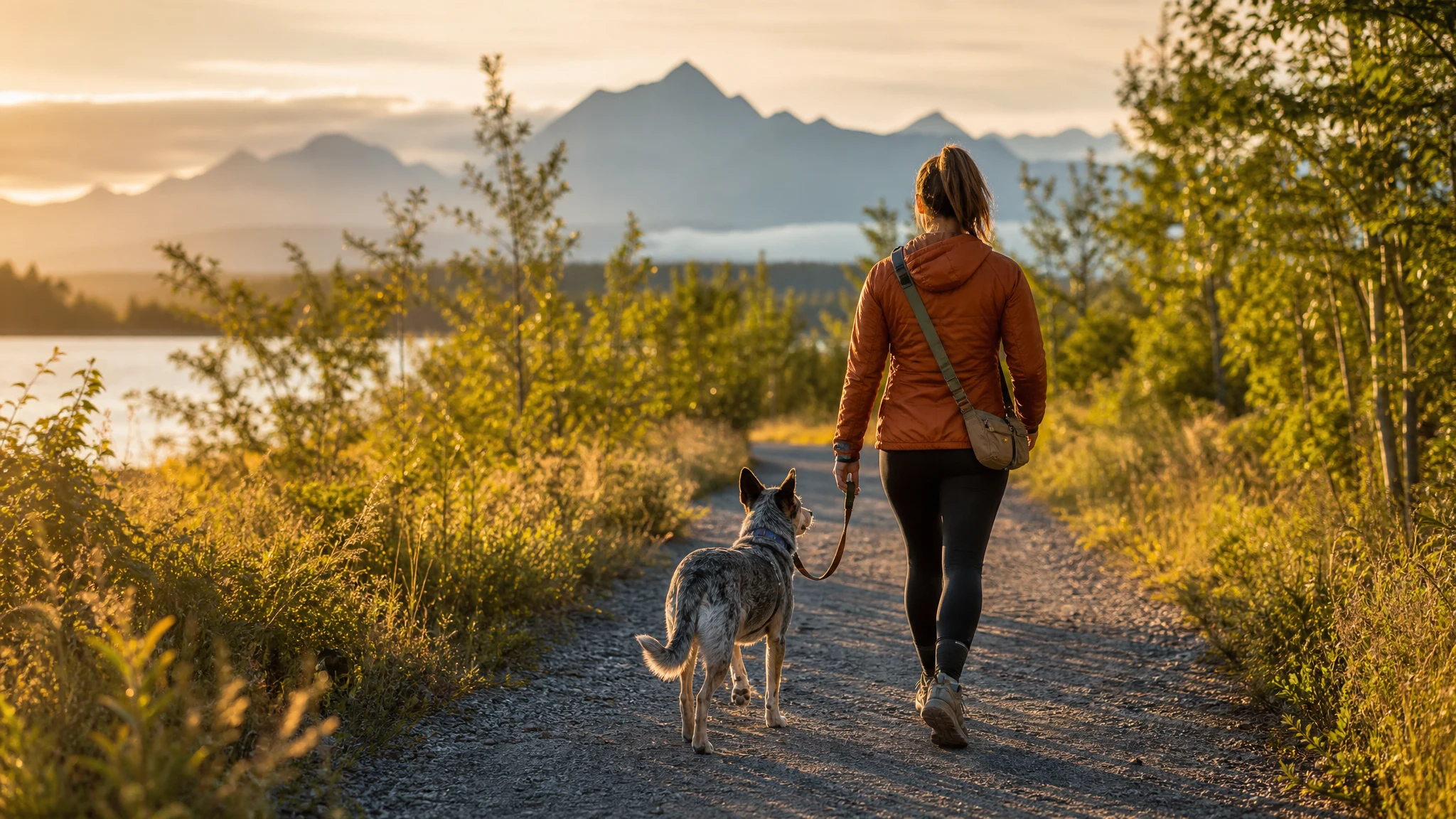
General training information. For aggression, sudden behavior changes or health concerns, see your veterinarian first.
Training a dog in Anchorage comes with its own flavor. You may be teaching a puppy to ignore a moose-sized distraction in January. You may be proofing recall on a trail that is also a skijoring route. Or you may be sorting out which park lets your dog off leash and which one does not.
This guide covers dog training in Anchorage from the ground up. It explains the kinds of training on offer, what reward-based training is and why veterinary behavior experts recommend it, and which certified trainers we can point to. It also covers what the city expects of dog owners and where you can practice. Where a price is not published, we say so plainly and tell you who to ask.
Key Takeaways
- Anchorage dogs 4 months and older need a current license, and the license is valid only with a current rabies vaccination, according to Anchorage Animal Care & Control.
- Dogs in public places must be under control. Off-leash time belongs in designated off-leash areas or under the narrow "control by command" rule.
- Group classes, private lessons, day training and board-and-train all exist as formats. Each suits a different dog and a different household.
- Reward-based training is the approach supported by the American Veterinary Society of Animal Behavior (AVSAB). Shock, prong and choke tools and dominance methods have no place in this guide.
- We found no published training prices for Anchorage. Ask each trainer for current fees, what is included and their cancellation terms.
- Moose and lake swimming rules are real local factors. Plan walks and park trips around them.
Table of Contents
- The Kinds of Dog Training Available in Anchorage
- What Reward-Based Training Is and Why AVSAB Recommends It
- Certified Dog Trainers in Anchorage
- What Dog Training Costs in Anchorage
- Anchorage Rules That Shape Your Training
- Where to Practice: Off-Leash Parks and Trails
- Local Hazards: Moose and Lake Rules
- A Practical Training Plan for Anchorage Dogs
The Kinds of Dog Training Available in Anchorage
Before you look at dog trainers in Anchorage, it helps to know what format you are shopping for. The same trainer may offer more than one. Here is how the common options differ.
Group Classes
A group class puts several dogs and owners in one room with an instructor. It is the usual home of puppy classes and dog obedience training in Anchorage for basic skills like sit, down, loose-leash walking and coming when called.
The big advantage is practice around other dogs. Your dog learns to work with distractions in the room, and you learn by watching other handlers. The drawback is less one-on-one attention. A dog who is very fearful or reactive may find a group too much.
Private Lessons
Private lessons give you the instructor's full attention, often at your home or in a quiet space. They suit specific problems, like pulling on leash, door manners, jumping up or a dog who struggles in class. They also suit busy schedules and dogs who need a calmer setting.
Some trainers work remotely. One of the certified trainers listed below is shown as offering remote training, which can help if winter roads or your work hours make travel hard.
Day Training
In day training, a trainer works with your dog while you are away, then coaches you to keep up the skills. The catch is that the dog is not the only one who needs training. If you do not learn the cues and routines, the behavior often fades at home. Ask any trainer how the handoff to you works.
Board-and-Train
Board-and-train means your dog stays with the trainer for days or weeks. Some owners like the head start. Others worry about a dog being away from home, particularly a puppy or an anxious dog.
If you consider this option, ask direct questions. What methods are used? Where does the dog sleep and how often does it get out? Can you visit or see updates? How will the skills transfer to your home? A trainer who uses reward-based methods should be glad to answer all of this.
How to Choose
- Puppy with no major problems: a group puppy class plus practice at home.
- One specific habit to fix: a few private lessons.
- Dog who is fearful, reactive or overwhelmed in groups: private help, and a talk with your veterinarian first.
- Very limited time: day training or board-and-train, with a clear plan for your own follow-through.
What Reward-Based Training Is and Why AVSAB Recommends It
Reward-based training means you teach your dog by rewarding behavior you like. Rewards can be small food treats, a favorite toy, a game of tug, praise or a chance to go sniff something interesting. When a behavior pays off, the dog does it more often.
You also manage the environment so your dog has fewer chances to practice the wrong thing. A dog who cannot reach the counter cannot learn that counters are a buffet. That is not a trick. It is good planning.
Why AVSAB Supports It
The American Veterinary Society of Animal Behavior (AVSAB) is a professional group of veterinarians focused on animal behavior. Its position is that reward-based training should be the standard for training and behavior modification. AVSAB cautions that punishment-based methods can increase fear, stress and aggression, and can damage the bond between dog and owner.
That is why we do not recommend shock collars, prong collars, choke collars, alpha rolls, scruffing or any "be the pack leader" dominance advice. Dogs do not need to be dominated. They need clear information, patient practice and rewards that matter to them.
What It Looks Like in Practice
- Lure and reward: a treat guides the dog into position, then the lure fades.
- Capture: you mark and reward a behavior the dog offers on its own, such as lying down.
- Short sessions: a few minutes at a time, ending while the dog is still keen.
- Consistency: everyone in the household uses the same cues and rules.
- Gradual difficulty: you add distance, duration and distraction one at a time.
Red Flags When Interviewing a Trainer
- The trainer recommends or sells shock, prong or choke tools.
- The trainer talks about dominance, being "alpha" or "showing the dog who is boss."
- The trainer promises fast, guaranteed results. Every dog learns at its own pace.
- The trainer will not explain methods or let you observe a class.
Certified Dog Trainers in Anchorage
In many places, anyone can call themselves a dog trainer. A credential is not a guarantee of quality, but it tells you the person has met some standard of knowledge. The credential most often seen is CPDT-KA, which stands for Certified Professional Dog Trainer, Knowledge Assessed.
We did not find an official local trainer directory for Anchorage. The listings below come from two kinds of sources: a third-party directory, and one business's own staff page. We have not verified credentials against the certifying body's registry, so please confirm them yourself before you book.
Trainers Listed With CPDT-KA
- Janelle Doggett, Alyeska Canine Trainers. Listed in Anchorage, AK with the CPDT-KA credential on DogTrainerLocator.com, a third-party directory.
- Justin Macias, Stay Frosty K9 Training. Listed in Anchorage, AK with the CPDT-KA credential on DogTrainerLocator.com.
- Lucy Bailey. Listed with the CPDT-KA credential on DogTrainerLocator.com for Anchorage, AK, with remote training. The listing names no business.
- Sheryl Makelim, Alaska Dog Sports LLC. Shown on the business's own staff page as CCTBS and a CPDT-KA instructor.
This is a list of names we can point to, not a ranking and not a recommendation of one over another. Call or message more than one and compare how they work.
Questions to Ask Before You Book
- What training methods and equipment do you use?
- What credentials do you hold, and how can I verify them?
- What is the class size, and what ages and skill levels do you accept?
- What vaccines do you require?
- What are the fees, what is included and what is your cancellation policy?
- Can I watch a class or lesson first?
Vaccine Requirements for Puppy Classes
Facilities set their own health rules, so ask before you enroll. As one example, Alaska Dog Sports says in its FAQs that it requires proof of distemper and parvo vaccination for all dogs, and proof of rabies vaccination by 4 months of age. For puppies 10 to 14 weeks old, it asks for one distemper/parvo vaccination at least 7 days before entering the facility. Puppies 15 weeks and older need two distemper/parvo vaccinations.
Other trainers may ask for something different. Your veterinarian can tell you where your puppy is on the schedule.
When Training Is Not Enough
If your dog has a sudden behavior change, seems to be in pain, or has any medical concern, see your veterinarian first. Many behavior problems have a health cause.
If your dog has shown aggression toward people, such as growling, snapping or biting, do not rely on a general obedience class. Talk to your veterinarian and ask for a referral to a certified behavior professional. We did not find a verified list of behavior professionals for Anchorage, so ask your vet's office who they work with and check credentials directly.
What Dog Training Costs in Anchorage
You will want numbers, and we wish we could give you reliable ones. We did not find published training prices for Anchorage trainers, so we will not guess at what a class, private lesson or board-and-train stay costs. Prices change, and any number we invented could mislead you.
What we can tell you is how to compare quotes fairly:
- Ask what a package includes. How many sessions, how long each one runs and whether homework support is included.
- Ask about extras. Equipment, make-up sessions, travel or a separate registration fee.
- Ask about cancellation and refunds before you pay.
- Compare format against format. A group class and a private lesson are different services, so a price gap does not mean one is better value.
- Be wary of guarantees. Behavior is not a product with a warranty.
Costs the Municipality Does Publish
Some of the costs of owning a dog in Anchorage are published. Anchorage Animal Care & Control lists these license fees:
| License type | 1 year | 2 years | 3 years |
|---|---|---|---|
| Unsterilized dog | $23 | $43 | $63 |
| Sterilized dog | $15 | $27 | $39 |
For adoption fees, Animal Care & Control publishes them on its adoption page. Check there for current amounts, since we do not list them here.
Anchorage Rules That Shape Your Training
Local rules decide what you need to teach and where you can do it. Here is what the Municipality of Anchorage says. For the exact wording, check with Animal Care & Control.
Licensing
According to Anchorage Animal Care & Control, all dogs 4 months and older living in the Municipality of Anchorage need a current license. A license is valid only if the rabies vaccination is current. You can get one online, by mail, or in person at Animal Care and Control or participating veterinary clinics.
Training tie-in: licensing and vaccination also matter for the off-leash dog parks, covered below.
Rabies Vaccination
Animal Care & Control says state law requires rabies vaccination of dogs over 4 months of age. It also cites state regulation 7 AAC 27.022, which calls for vaccination following the Compendium of Animal Rabies Prevention and Control. Your veterinarian handles the schedule.
Leash and Control
Animal Care & Control's leash law page explains that Anchorage Title 17 requires animals in public places to be under control. Control by leash includes a leash, chain or electronic collar that can physically restrain the animal. The page states no maximum leash length.
Off-leash is allowed in two situations. One is a designated off-leash dog park space. The other is "control by command," which needs all three of these:
- The animal is engaged in an activity that precludes it from being restrained.
- It is in an area normally associated with that activity.
- The activity is conducted in a way that minimizes impact on the public.
That is a narrow exception. A dog running free on a neighborhood street or a busy trail because "he always comes back" does not meet it. Reliable recall is a great skill, but it does not by itself change where you may legally have your dog off leash. If you are unsure, keep the leash on and ask Animal Care & Control.
Barking
The Animal Care & Control barking page suggests talking to the owner first. If that does not work, call Animal Care & Control at 343-8119. The page gives no minutes or hours that define a nuisance, so we do not either. If your own dog barks a lot, a trainer can help you work out why, whether it is boredom, alarm barking at the window or separation distress.
How Many Dogs You Can Have
The facility license page does not state a per-household limit. It does say a Multi-Animal Facility License is required for four or more dogs. A Mushing Facility License applies to four or more dogs over 4 months old trained to pull sleds, carts or vehicles. If you are near those numbers, check with Animal Care & Control.
Dangerous Dog Rules
We did not find the municipality's dangerous dog rules in a source we could verify. If your dog has bitten or threatened someone, contact Animal Care & Control for the current rules, and get help from your veterinarian and a certified behavior professional.
Where to Contact
Anchorage Animal Care and Control is at 4711 Elmore Road, Anchorage, AK 99507. The municipality lists hours as Monday through Friday 12:00 P.M. to 7:00 P.M. and Saturday and Sunday 11:00 A.M. to 5:00 P.M., closed on listed holidays. Confirm hours before you go.
Where to Practice: Off-Leash Parks and Trails
Training only sticks if you practice in the real world. Anchorage Parks and Recreation lists several off-leash spaces. Some are fenced and some are trails. The parks page gives no street addresses, fees or hours for these, so check the municipal parks page or the park map before you go.
Fenced Off-Leash Areas
- Chanshtnu Muldoon Dog Park: fenced, with a separate enclosed section for small dogs under 25 lbs.
- Whisper Faith Kovach Park: fenced, with a separate enclosed section for small dogs under 25 lbs.
- Valley of the Moon Park: fenced off-leash area.
- Arctic Benson Park: fenced off-leash area.
- South Anchorage Sports Park: listed as both off-leash trails and a fenced off-leash area.
Off-Leash Trails and Larger Areas
- Connors Bog: off-leash use is limited to the designated area once skijoring trails are groomed.
- Russian Jack Springs Park: listed as an off-leash area. Dogs must be licensed and have a current rabies vaccination.
- University Lake Park: off-leash trails. Certain trails may be closed to off-leash use seasonally and will be posted.
- Far North Bicentennial Park (North Gasline Trail): off-leash trails.
General Off-Leash Area Rules
According to the municipal parks page, these themes apply across the off-leash areas:
- Dogs must be leashed when entering and leaving.
- The owner must stay in the dog area.
- Dogs must be licensed and have a current rabies vaccination.
- Clean up after your dog.
- Classified dogs and females in heat are prohibited at some listed areas, including Connors Bog and Russian Jack Springs Park.
Those leash-on entry and exit rules are a training opportunity. A dog who can wait calmly at a gate, then walk beside you through it, makes every park visit safer. Practice at home before you try it at a busy gate.
Using a Dog Park Wisely
A dog park is not a training class. It is a place to use skills you have already built. Watch your dog's body language. If your dog hides, freezes, gets stiff or is being chased and cannot get away, leave. Puppies who have not finished their vaccinations should wait until your veterinarian says they are ready.
Local Hazards: Moose and Lake Rules
Moose
Moose are part of life in Anchorage, and they are a training topic as much as a safety one. Alaska's News Source reported, quoting an Alaska Department of Fish and Game biologist, that a moose killed a dog in a fenced East Anchorage backyard in January 2023. The advice from the department was to keep a safe distance from moose, supervise dogs closely outdoors, and never feed moose. The report noted that moose come into town in deep snow and are stressed.
What does that mean for training?
- Teach a solid recall and a "let's go" turn-away cue. Practice in low-distraction places first, with high-value rewards.
- Do not rely on a fence. Supervise your dog in the yard, particularly in winter.
- Keep your dog on leash when you see a moose, and increase the distance. Do not try to get close or let your dog investigate.
- Practice calm behavior near startling sights so your dog can stay with you when something big appears.
Swimming Restrictions
The municipal parks page says dog swimming is prohibited at University Lake Park. It also advises awareness of lakes posted against dog swimming. Read the signs, and teach a dependable "leave it" and recall so your dog does not head for the water when you say no.
We did not find a verified local source on winter ice, road salt or summer heat hazards, so we will not give specifics here. Your veterinarian can advise on cold-weather paw care and warm-weather exercise limits for your dog.
A Practical Training Plan for Anchorage Dogs
Whether you hire a trainer or work on your own, a good plan builds from the basics. Here is a sensible order for dog obedience training in Anchorage, adjusted for local life.
Step 1: Name, Attention and Rewards
Teach your dog that looking at you pays. Say the name, and when your dog turns, reward. Do this in short sessions, many times a day. This skill underlies everything else.
Step 2: Sit, Down and Stay
Use a treat to lure each position, then add the cue word. Build a stay slowly, a second at a time. Add distance only after duration is steady.
Step 3: Loose-Leash Walking
Reward your dog for staying near you, and stop moving when the leash goes tight. Winter gear, snow and heavy coats can make leash handling harder, so practice with your gloves on. A comfortable harness or flat collar that fits well is fine for this method. Skip any tool that works by causing pain or discomfort.
Step 4: Recall
Start indoors. Call your dog with a happy voice, then reward generously. Use a long line outdoors in safe spaces. Never call your dog to you to scold, because that teaches the dog that coming means trouble.
Step 5: Leave It and Wait
These cues keep dogs out of trouble around trash, wildlife and other dogs. Practice "wait" at doors and at the dog park gate, matching the leash-on entry rules.
Step 6: Socialization and Calm Alone Time
Give young puppies safe, positive exposure to people, sounds, surfaces and other vaccinated dogs, following your veterinarian's guidance. Also teach your dog to settle on a mat and to be comfortable alone for short periods. That will help with barking and separation stress later.
Keeping Progress Going Through the Seasons
Anchorage has long dark winters and bright summers, and your routine will change with them. In winter, use indoor games, scent work, trick training and short practice sessions to keep your dog's mind busy. In summer, take the skills you have built outdoors, but stay alert to posted rules and wildlife. A few minutes of practice every day beats one long session on the weekend.
When to Call for Help
- Medical or sudden behavior change: see your veterinarian.
- Aggression toward people: see your veterinarian and a certified behavior professional.
- Steady progress stalls: a few private sessions with a reward-based trainer can fix handling or timing problems.
Final Thoughts
Good dog training in Anchorage comes down to three things: choose a humane, reward-based trainer, follow the local rules for licensing, vaccines and leashes, and practice in places that fit your dog's skill level. Because we found no published training prices, ask each trainer for a clear quote. Confirm credentials yourself, and be patient. Your dog is learning a lot, and so are you.
Sources
- Municipality of Anchorage, Animal Care & Control
- Animal Care & Control, Leash Law
- Animal Care & Control, Dog License
- Animal Care & Control, Rabies Vaccination
- Animal Care & Control, Barking Dogs
- Animal Care & Control, Facility Licenses
- Animal Care & Control, Adopting a Pet
- Anchorage Parks and Recreation, Dog Parks
- Alaska's News Source, Fish and Game warns of aggressive moose after dog is killed
- Alaska Dog Sports LLC, FAQs
- Alaska Dog Sports LLC, Staff
- DogTrainerLocator.com, Janelle Doggett
- DogTrainerLocator.com, Justin Macias
- DogTrainerLocator.com, Lucy Bailey