Adopted a Dog in Anchorage? A 30-Day Training Plan
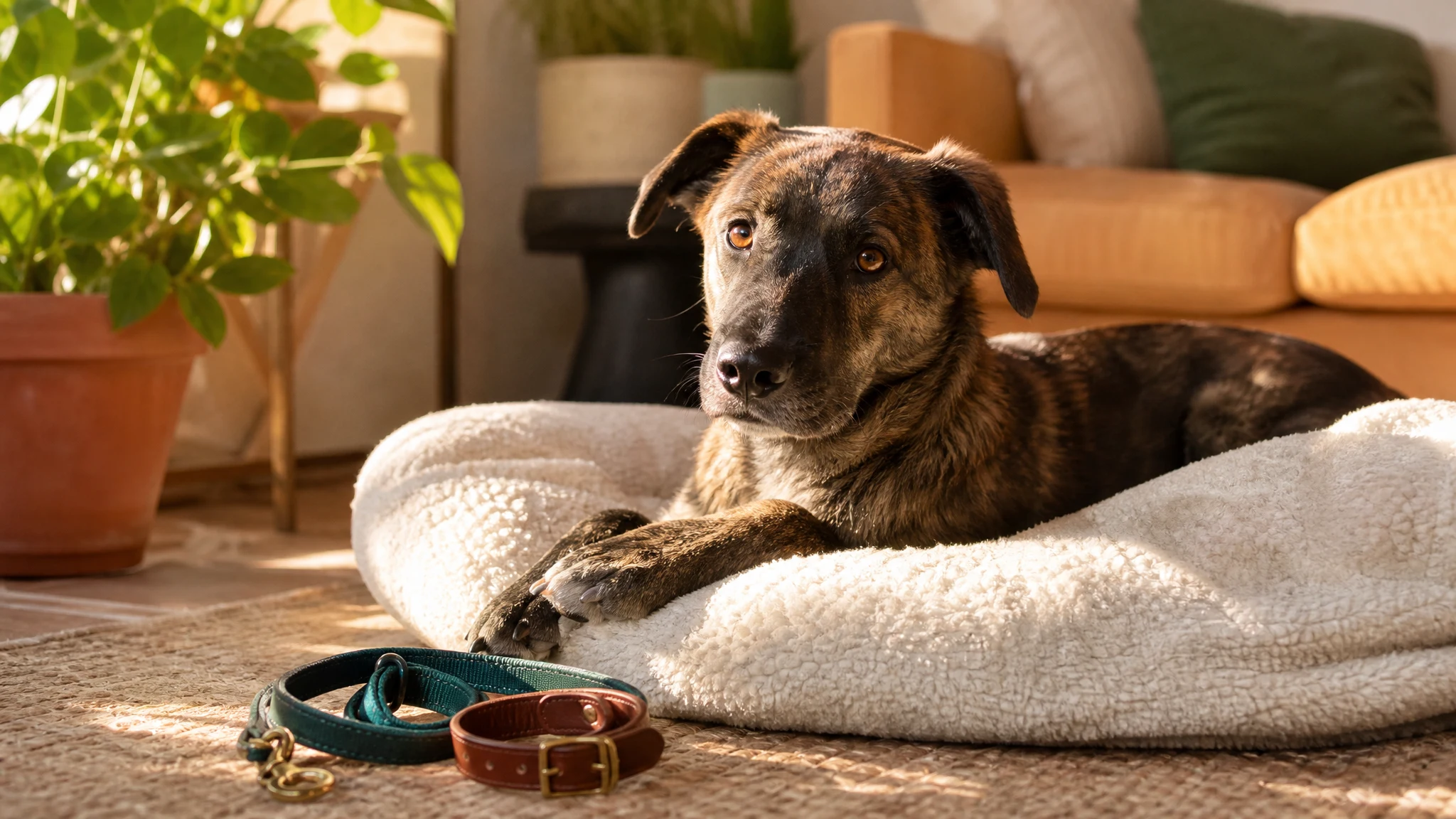
General training information. For aggression, sudden behavior changes or health concerns, see your veterinarian first.
You signed the papers, buckled the seat belt around a nervous new friend, and drove home. Now what? The first month sets the tone for everything that follows, and it does not need to be complicated.
This plan is for training a rescue dog in plain, humane steps. It follows the adopted dog's first 30 days one week at a time: decompression, routine, house training, name and recall, then alone time. It also covers the Anchorage rules and local hazards you will run into along the way.
Where Anchorage Adopters Often Start
Many people begin at the municipal shelter. Anchorage Animal Care and Control is at 4711 Elmore Road, Anchorage, AK 99507. The municipality lists hours of Monday through Friday 12:00 P.M. to 7:00 P.M. and Saturday and Sunday 11:00 A.M. to 5:00 P.M., with closures on listed holidays. Check the Animal Care and Control website before you go, since hours can change.
The municipality also publishes dog adoption fees on its adoption page. Check that page for current amounts rather than relying on a number from anywhere else. If you adopted from a different rescue or group, the plan below works the same way.
What You Need Before Day One
- A standard fixed-length leash and a flat collar or a well-fitted harness with an ID tag
- Small, soft treats your dog can eat quickly, plus some of their regular food for meals
- A treat pouch or a pocket you can reach fast
- A crate, an exercise pen or baby gates, so your dog has a safe, small space
- A bed or blanket for that space, and a few chew toys and food puzzles
- Enzymatic cleaner for accidents
- A long, light training line for recall practice later in the month
- A notebook or phone notes to track meals, potty trips and sleep
Ask the shelter or rescue what food your dog was eating and keep it the same at first. Switch slowly later if you want to change it, and ask your veterinarian for guidance.
Do These Anchorage Basics First
License and rabies vaccine
The Municipality of Anchorage says all dogs 4 months and older living in the municipality need a current license, and a license is valid only if the rabies vaccination is current. State law also requires rabies vaccination for dogs over 4 months of age.
The municipality lists these license fees:
- Unsterilized dogs: $23 for one year, $43 for two years, $63 for three years
- Sterilized dogs: $15 for one year, $27 for two years, $39 for three years
You can get a license online, by mail, or in person at Anchorage Animal Care and Control or participating veterinary clinics. Ask your adoption paperwork or your veterinarian whether your dog's rabies vaccine is current before you apply.
Leash rules
Anchorage Title 17, as described by Animal Care and Control, requires animals in public places to be under control. Control by leash means a leash, chain or electronic collar that can physically restrain the animal. Off-leash is allowed only in a designated off-leash dog park space, or when a dog is under control by command, which has specific criteria. For a new rescue dog, plan on a leash everywhere outside your own home until your recall is reliable and you understand the rule. Ask Animal Care and Control if you are unsure.
The 30-Day Plan, Step by Step
Step 1: Week 1 (Days 1 to 7), Decompression
Your dog has just gone from a kennel or foster home to a place that smells, sounds and feels new. Many adopters see a very quiet dog or a very wild dog in the first days. Either one is usually stress, not personality.
- Keep life small. No visitors, no dog parks, no pet store trips. Let your dog meet you and the house first.
- Set up a safe space. Put a bed in a calm corner or crate with the door open. Never force your dog into it.
- Take a calm tour on leash. Walk the yard or the block so your dog learns where the potty spot is.
- Feed and walk on a schedule. Predictable times help a worried dog relax.
- Reward calm. When your dog lies down, sighs or looks at you, quietly drop a treat nearby.
- Let your dog choose. Do not hug, loom over or lift a dog who is still deciding about you. Sit near and let them approach.
Start potty training on day one too. Take your dog out first thing, after meals, after naps, after play and before bed. Praise and treat right when they finish outside, not after you come back in.
Step 2: Week 2 (Days 8 to 14), Build the Routine
By now your dog may be testing the edges. Routine gives them something to count on.
- Write down a daily rhythm. Wake up, potty, breakfast, walk, rest, potty, dinner, play, last potty, bed. Keep the order the same even if the clock times shift.
- Teach one easy cue at a time. Start with sit. Hold a treat at your dog's nose, lift it slightly over the head, and reward the moment the bottom touches down. Then add the word.
- Add a mat or settle spot. Reward your dog for lying on a mat. This becomes a calm place for visitors and meals.
- Practice handling gently. Touch a paw or ear, then treat. Go slowly with dogs who flinch.
- Offer enrichment. Use a food puzzle or a chew so your dog learns to be busy without you.
Keep sessions to about two to five minutes. Several short rounds a day beat one long one.
Step 3: Week 3 (Days 15 to 21), House Training, Name and Recall
Accidents often continue into week three, especially if your dog's history is unknown. Stay consistent and avoid scolding. Punishment can teach a dog to hide when they need to go.
- Keep supervising. If you cannot watch your dog, use the crate, pen or a tether to you. Open the door to outside before they signal.
- Clean accidents fully. Use the enzymatic cleaner so the spot does not smell like a bathroom.
- Teach the name as a good thing. Say the name once in a happy voice. When your dog looks at you, give a treat. Do not use the name for scolding.
- Start indoor recall. Stand a few steps away, say "come" in a cheerful voice, and reward when your dog reaches you. Increase distance slowly through the house.
- Move to the yard on a long line. Use the training line, never a retractable leash near roads. Practice the same game with more distractions.
- Make coming back always pay. Never call your dog to end the fun and then do something unpleasant, like a bath.
Recall takes months to build, not weeks. This month you are laying the foundation.
Step 4: Week 4 (Days 22 to 30), Alone Time
Many shelter dogs find being alone hard. Build it up in small steps so your dog does not panic.
- Start with seconds. Give a chew, step out of the room, return before your dog finishes worrying, and calmly reward.
- Lengthen slowly. Move to a minute, then five, then fifteen. If your dog gets upset, go back to an easier step.
- Keep leaving and arriving boring. No big goodbyes or greetings. Calm is contagious.
- Exercise first. A leashed walk and a sniff session before you leave helps most dogs settle.
- Try a short real outing. Once your dog handles 30 minutes of practice, try a short errand. Track how they did.
On days 29 and 30, review your notes. Which cues are going well? Where do accidents still happen? Choose one or two goals for the next month.
Anchorage Hazards to Plan Around
Moose
Moose are part of life here. Alaska's News Source, quoting an Alaska Department of Fish and Game biologist, reported that a moose killed a dog in a fenced East Anchorage backyard in January 2023. The advice from Fish and Game was to keep a safe distance from moose, supervise dogs closely outdoors, and not feed moose. The same report notes moose come into town in deep snow and are stressed.
For a new rescue dog, that means leashed potty trips, a close eye on the yard and a plan to move away calmly if you see a moose. A fence alone is not a guarantee of safety. Teach a hand target or a "let's go" cue early, since a dog who turns toward you easily is easier to guide away.
Lake swimming
Anchorage Parks and Recreation says dog swimming is prohibited at University Lake Park and advises watching for lakes posted against dog swimming. Read signs before you let a dog near water.
When You Are Ready for Off-Leash Parks
Do not start with an off-leash park in your first 30 days. Wait until your dog is relaxed around other dogs and comes when called, even with distractions. Ask your adoption group for any history with other dogs.
The Municipality of Anchorage Parks and Recreation lists off-leash areas including Connors Bog, Russian Jack Springs Park, University Lake Park, Far North Bicentennial Park (North Gasline Trail), South Anchorage Sports Park, Chanshtnu Muldoon Dog Park, Whisper Faith Kovach Park, Valley of the Moon Park and Arctic Benson Park. Some are fenced, and some are trails. Chanshtnu Muldoon Dog Park and Whisper Faith Kovach Park have a separate enclosed section for small dogs under 25 lbs.
The parks page gives these general rules:
- Dogs must be leashed entering and leaving the off-leash area.
- Owners must stay in the dog area.
- Dogs must be licensed and have a current rabies vaccination.
- Classified dogs and females in heat are prohibited at some areas, including Connors Bog and Russian Jack Springs Park.
- Some trails close seasonally to off-leash use, and closures will be posted.
The parks page does not list street addresses, fees or hours for these areas, so check with Parks and Recreation before you go. If you are unsure what "classified dog" means for your dog, ask the municipality.
Common Mistakes to Avoid
- Doing too much too soon. Visitors, parks and long outings in week one can overwhelm a dog.
- Punishing accidents. It slows house training and can damage trust.
- Skipping the license. A current rabies vaccine and license are required in Anchorage.
- Using harsh tools or methods. The American Veterinary Society of Animal Behavior supports reward-based training. Avoid shock, prong or choke collars, scruffing and "alpha" tactics, which can raise fear and make behavior worse.
- Leaving a dog off leash too early. A rescue dog in a new place may bolt. Use the leash and long line.
- Expecting a finished dog in 30 days. This month is a start.
Tips That Help
- Count your "honeymoon" with care. Some dogs show their full personality only after several weeks or months.
- Keep notes. Patterns in potty trips and stress signs show up on paper.
- Watch body language. Lip licking, yawning, turning away and a tucked tail all say, "I need space."
- Give your dog daily sniffing time on walks. It tires a dog mentally.
- Ask for help early if a skill stalls.
What to Expect
With steady practice, many adopted dogs begin to settle in over the first month. You may see easier potty trips, more relaxed body language and quicker responses to their name. Some dogs take longer, especially those with a hard history, and that is normal.
Progress is rarely a straight line. Expect good days and setbacks, and treat setbacks as information about what to slow down. This plan can help build trust and habits, but results vary from dog to dog.
When to Call for Help
If your dog seems sick, stops eating, has repeated vomiting or diarrhea, is in pain, or has sudden behavior changes, see a veterinarian. Medical problems can look like behavior problems.
If your dog growls, snaps or bites people, call your veterinarian and then work with a certified behavior professional. Do not try to handle aggression toward people on your own.
For classes, private help and what to ask before you sign up, see our guide to dog training in Anchorage, where to train and what it costs. One local example of an entry rule: Alaska Dog Sports LLC, in its FAQs, says it requires proof of distemper and parvo vaccination for all dogs and proof of rabies vaccination by 4 months of age. Always check a trainer's current requirements before you book.
Sources
- Municipality of Anchorage, Animal Care & Control
- Municipality of Anchorage, Animal Care & Control, adopting a pet
- Municipality of Anchorage, dog license page
- Municipality of Anchorage, rabies vaccine page
- Municipality of Anchorage, Leash Law page
- Municipality of Anchorage Parks and Recreation, Dog Parks
- Alaska's News Source, report quoting Alaska Department of Fish and Game on moose and dogs
- Alaska Dog Sports LLC, FAQs