Training Your Dog for Anchorage's Weather and Terrain
General training information. For aggression, sudden behavior changes or health concerns, see your veterinarian first.
Anchorage dog safety is not one skill. It is a handful of small habits that work together: a dog who leaves things alone, comes back when called, lets you handle their paws, and settles calmly to cool down or warm up.
This guide walks through those habits step by step. It uses reward-based methods in line with the American Veterinary Society of Animal Behavior (AVSAB). It also sticks to what Anchorage's official sources actually say about local hazards, and it tells you plainly where they say nothing.
What the local sources document
Two hazards are documented for Anchorage in the sources we rely on:
- Moose in town. Alaska's News Source, quoting an Alaska Department of Fish and Game (ADF&G) biologist, reported that a moose killed a dog in a fenced East Anchorage backyard in January 2023.
- Swimming limits at lake parks. The Municipality of Anchorage Parks and Recreation dog parks page says dogs may not swim at University Lake Park. It also advises being aware of lakes posted against dog swimming.
The municipal pages we reviewed do not publish guidance on hot pavement, warm-day walking, ice, or road salt. We will not invent numbers or rules for those. Where they come up below, the training advice is general, humane skill-building, and your veterinarian is the right person for health specifics.
Materials you will need
- A standard leash and a well-fitted flat collar or harness. Anchorage's Title 17 requires dogs in public places to be under control, and control by leash is the usual way to meet that.
- Small, soft, high-value treats that you can deliver fast.
- A long line (a light, longer training leash) for practicing recall in open spaces. Do not use it in a way that lets your dog run to the end and jerk.
- A towel and a bowl for water.
- Dog booties, if you want to try them. Start with one or two to get your dog used to the feel.
- Your dog's license and rabies paperwork. Anchorage's license page says dogs 4 months and older need a current license, and a license is valid only if the rabies vaccination is current.
Step 1: Teach a rock-solid "leave it"
Moose are the most serious wildlife hazard documented for in-town Anchorage. ADF&G's advice, as reported by Alaska's News Source, is to keep a safe distance from moose, supervise dogs closely outdoors, and not feed moose. The report adds that moose come into town in deep snow and are stressed.
A dog who can disengage on cue gives you a precious second or two to turn around and leave.
- Hold a treat in a closed fist. Let your dog sniff, lick, and paw at it.
- The moment your dog pulls away, even slightly, say "yes" and give a different treat from your other hand.
- Repeat until your dog backs off the fist right away. Then add the cue "leave it" just before you present the fist.
- Move to an open palm, then a treat on the floor, then a dropped toy.
- Practice with real-life distractions: a squirrel across the street, a stranger walking by, a scent trail on the park path.
Moose-specific tip: if you see a moose, do not rely on the cue alone. Calmly turn your dog away, put distance between you and the animal, and go back the way you came. The cue buys you time, but distance is the real safety measure.
Step 2: Build a recall that works with distractions
A fast recall helps in many Anchorage situations: a moose far down the trail, a posted lake, a skijoring team approaching.
- In a quiet room, say your dog's name and a cheerful cue like "come." The instant they look at you, reward with several treats in a row.
- Move to the yard, then a quiet street, using the long line. Call once, in a happy voice, and reward generously when your dog arrives.
- Add small distractions one at a time. If your dog does not respond, do not repeat the cue over and over. Make yourself interesting, step backward, and reward when they turn toward you.
- Never call your dog to you for something unpleasant. Recall should always predict good things.
- Keep the long line on until your dog comes back reliably around real distractions.
Off-leash time is only allowed in certain places. The Anchorage Animal Care and Control Leash Law page says off-leash is permitted in a designated off-leash dog park space, or when a dog is under control by command, which has three specific criteria. For most everyday walks, assume your dog should be on a leash.
Step 3: Practice off-leash park manners
The Parks and Recreation dog parks page lists several designated spots, including Connors Bog, Russian Jack Springs Park, University Lake Park, Far North Bicentennial Park (North Gasline Trail), South Anchorage Sports Park, Chanshtnu Muldoon Dog Park, Whisper Faith Kovach Park, Valley of the Moon Park and Arctic Benson Park. Some are fenced and some are trails.
The general rules on that page include:
- Dogs must be leashed when entering and leaving the off-leash area.
- Owners must stay in the dog area.
- Dogs must be licensed and have a current rabies vaccination.
- Females in heat and classified dogs are prohibited at several sites.
Practice the entry and exit routine at home first. Ask for a sit at the gate, reward, clip on the leash calmly, and walk through. A dog who stays focused on you at the gate is easier to manage.
At Connors Bog, the page says off-leash use is limited to the designated area once skijoring trails are groomed. Check the park page for current details before you go. It does not publish hours or fees for these parks, so check with Anchorage Parks and Recreation if you need them.
Step 4: Teach a "skip the water" routine for posted lakes
The parks page says dog swimming is prohibited at University Lake Park, and that some trails there may be closed seasonally to off-leash use and will be posted. It also advises awareness of other lakes posted against dog swimming.
For a dog who loves water, this takes practice.
- Walk the trail on leash and mark and reward your dog every time they choose to keep walking past a shoreline access point.
- Teach a "this way" cue by luring your dog to turn away from a distraction, then rewarding.
- Read posted signs at each trailhead and make it a habit. Your dog follows your lead.
- If your dog bolts toward water, use your recall. If it does not work yet, go back to the long line and shorter distances.
Step 5: Teach calm paw handling
You will want to check paws after walks in any season. Dogs who accept paw handling are easier to inspect, wipe, and fit with booties.
- Touch one shoulder, then a leg, then briefly a paw. Reward each touch.
- Gradually hold the paw a second longer, then gently spread the toes and look between them. Reward after each small step.
- Add a towel wipe, then a quick check of each pad.
- Stop if your dog pulls away or seems upset. Go back to an easier step.
If you see limping, cracked pads, redness, or anything that looks painful, contact your veterinarian.
Step 6: Build a cooling and settling routine
Walking a dog in heat is a topic the Anchorage sources we reviewed do not address, so there is no municipal temperature guidance to quote. Hot pavement dogs may struggle with is likewise not covered. For a specific question about your dog, such as breed, age, or health conditions, ask your veterinarian.
What you can train is a calm routine that makes it easy to slow down and cool off:
- Teach a "settle" on a mat. Reward your dog for lying down and staying relaxed.
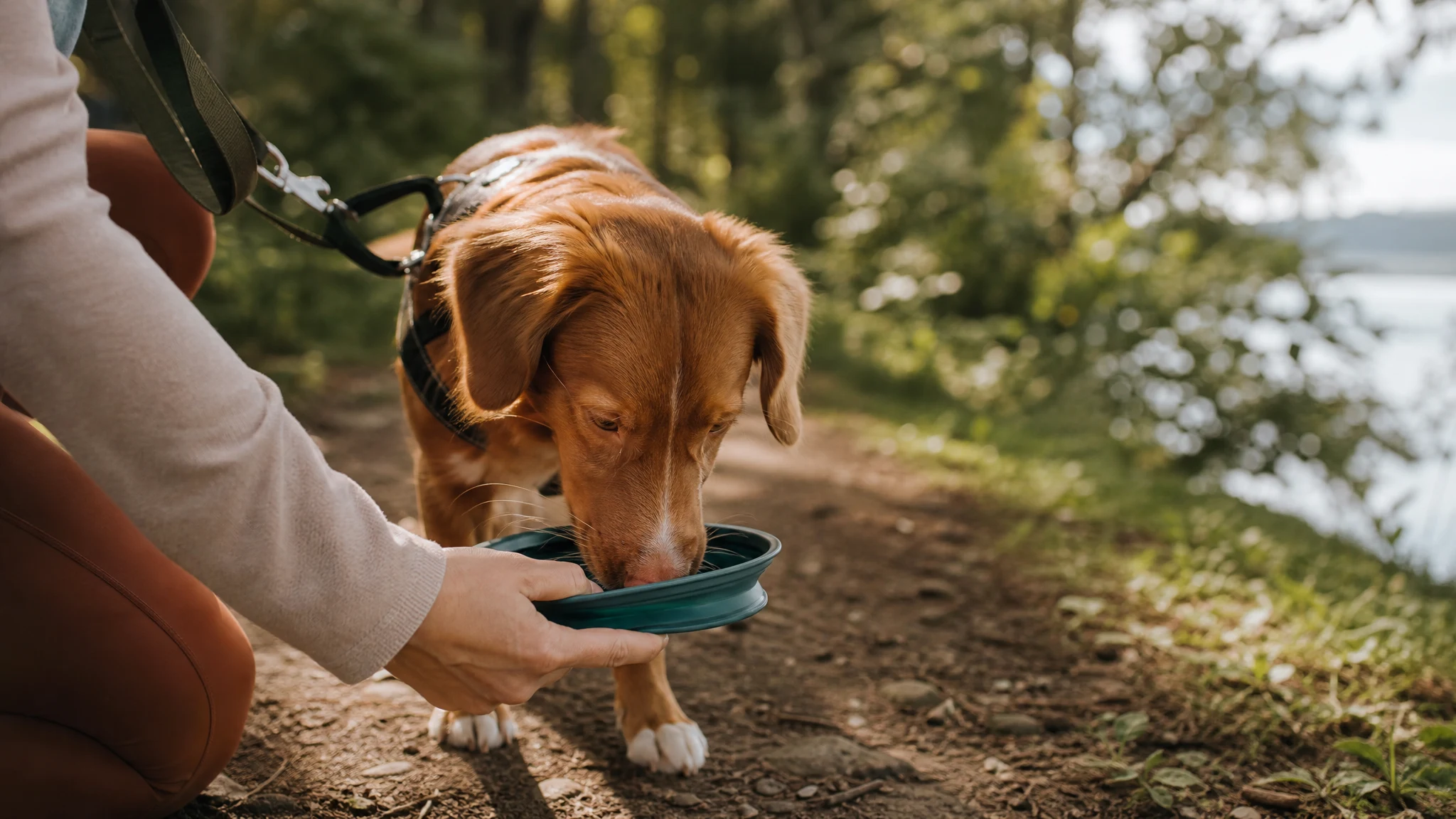
- Practice stopping partway through a walk: ask for a sit or settle, offer water from a bowl, and reward calm behavior.
- Before a walk on a sunny day, press the back of your hand to the pavement for several seconds. If it is uncomfortable for you, choose grass, dirt, or shaded trails instead.
- Choose your walking times and surfaces with your dog's comfort in mind, and cut the walk short if your dog slows down, pants heavily, or seems unwell.
If your dog collapses, vomits, seems confused, or shows signs of heat distress, treat it as an emergency and call a veterinarian right away.
Step 7: Introduce booties slowly
The municipal sources do not publish guidance on ice, snow, or road salt, so we cannot tell you what Anchorage streets are treated with. Some owners choose booties for winter walks or hot surfaces. If you want to try them, teach your dog to accept them first.
- Show the bootie, then reward. Repeat until your dog looks at it happily.
- Touch a bootie to a paw, reward, and take it away.
- Put one on for a few seconds, reward, and remove it. Slowly lengthen the time.
- Work up to all four, indoors first, then a short walk.
- Watch for rubbing or chafing, and stop if your dog is clearly distressed.
Make sure the fit is right. Ask a pet store or your veterinarian for help if you are unsure.
Common mistakes to avoid
- Trusting a fence alone. The ADF&G-sourced news report describes a dog killed in a fenced backyard. Supervise your dog outdoors, even at home.
- Letting your dog approach wildlife. Keep distance, and do not feed moose.
- Skipping posted signs. Seasonal trail closures and swimming bans are posted for a reason.
- Calling your dog for punishment. It teaches your dog that recall means something bad.
- Rushing booties. Forcing them on can create a lasting dislike.
- Using aversive tools. Shock, prong, and choke collars, and dominance methods are not recommended by AVSAB. They can increase fear and stress.
Expected results
With short, regular practice sessions, many dogs become more responsive to cues like "leave it" and "come" over a few weeks. Results vary by dog, age, history, and how consistent the practice is. Training can reduce risk, but it cannot remove it, so keep supervising and keep distance from wildlife.
If your dog is reactive or aggressive toward people, see a veterinarian and a certified behavior professional rather than trying to solve it alone.
Where to get help
If you would like in-person guidance, our overview of dog training in Anchorage, including where to train and what it costs is a good next step.